Tag: Economy

  • Free lunch does not exist.

    What is exactly the problem of universal health care systems? Why cannot economies maintain free health care for consecutive generations without struggling too much?

    To the non-economist audience, it might sound reasonable for every country to execute and maintain a sustainable system that manages pensions, healthcare and other welfare payments uniquely and in one account, under ethical and practical standards that match their financing plans perfectly. Politicians bring this matter up during the debates before all the elections and according to the stage the country is in, voters decide whether the health care system must be empowered or weakened. But why a heavenly, ethical and sustainable public healthcare system does not exist for every country? In this article, I will try to avoid technical matters and focus on the outcomes of studies on the issue. In the first paragraph, I will attempt to go over some very basic economics, as known as Econ 101 and then, I will discuss the issue.

    Specifically, we must consider the feasibility of welfare in every country. Well, some nations are wealthy, and some are not. Among wealthier nations, some of them are even wealthier and by some standards, they are getting more and more prosperous. To understand what I mean by wealth and being wealthy and getting wealthier, think of a simple quantified amount of wealth that each citizen holds. This wealth includes his/her financial assets, future income flows, savings, real estate and even knowledge. Taking an average of this value in dollars will easily help us rule out countries like China, India and Russia from wealthy countries and focus on the countries that have higher levels of what we refer to as “wealth per capita”. Without demonstrating many technical issues, the statistics of wealth show that a Chinese individual is not wealthier than an Eastern European citizen, of course on average.
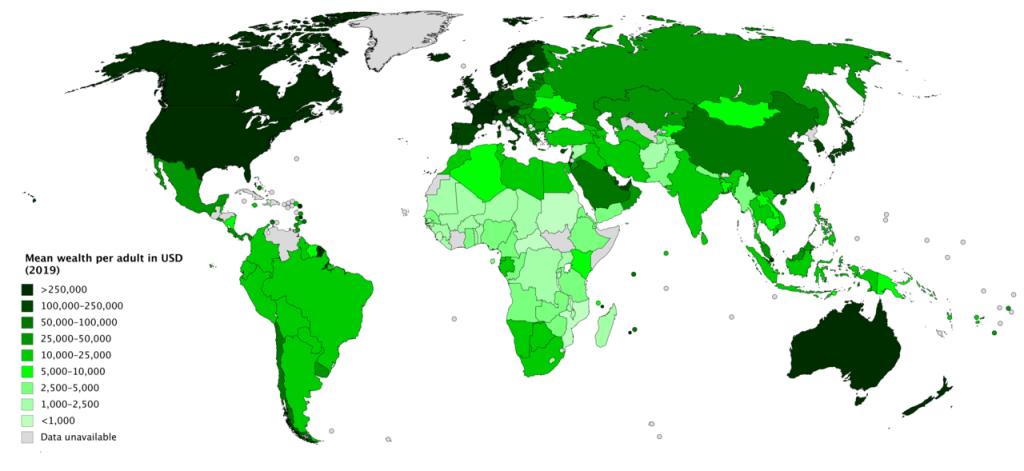
    Average Wealth (per Capita), source: Wikipedia

    These wealthy nations in Western Europe, North America, Eastern Asia and Oceania are not easily capable of increasing welfare using a high marginal propensity of consumption rate. Instead, their idea has been to increase the number of years that each citizen lives. In simple words, people are getting enough from their normal life and giving them more does not satisfy them enough. Therefore, the allocation of the market tells the policymaker that it is tangible to invest in the length of life, rather than increasing welfare by increasing consumption at any point in time.

    To conclude the previous paragraph that provided a simple overview, I refer back to the word feasibility: is the nation that is discussing a free healthcare system for everyone, “wealthy enough” to do so? I doubt that many nations are at this stage. Maybe few Northern European economies were capable of maintaining such healthcare systems for decades, but even in those countries, the natural ageing tendency of the society and higher life expectancy has brought an end to the infinite willingness to give everything to everyone for a relatively cheap price. Reconsiderations have started, and charging people for what they get is the most reasonable answer, just like the banana market. Pay 1 unit and get 1 banana, pay 2 and get two. In such markets, there are offers to receive more than you pay, when you pay more than average. Take the case of private retirement investment portfolios that insurance companies and banks offer to their clients.

    Rather than feasibility, there is philosophical reasoning behind a private healthcare system, and it raises from a sort of moral hazard. Imagine healthy people start paying very high taxes for people that consume cigarettes or alcohol on a daily basis. What I mean is a public healthcare system, in which there is an annual fee paid as taxes or fees, and everyone pays the same amount! You may want to point out to almost every country that subsidizes negatively the consumer of smoking products by additional taxes. Simple algebra shows that the average amount a smoker pays through taxes does not cover the costs of one case of lung cancer in a public hospital.

    Furthermore, some may mention that health is not an economic good that we shall consider like an ordinary product and therefore, the nature and characteristics of such “ethical” market must be different. So what is an economic good? Why isn’t lime or avocado subsidised to become available for the poorer classes in the society? This logic is misleading and calls for free education in universities, subsidised public transportation, subsidised fuel markets and at the end of the day, subsidises having children because it is “nice” and “ethical” to have children. This system is inefficient, works against its own standards by penalising citizens for every action in their daily lives and ends up in an inflationary economy that might even face a permanent stagnation.

    Eventually, we have to think of COVID crisis as a heavy shock that hit our economies. The world will not be the same, welfare will decrease for some time and we have to pay for what we have not initiated, and it is far from being fair. The problem is there does not seem to be any other solution for such hard times. Calls for increasing public expenditures are nonsense and even dangerous. Take a look at the public debt crisis in Southern Europe and you will see what a true long-term disaster it can become.

  • WHAT THE HELL HAPPENED IN 2020?

    November in Italy is the “Panettone” time of the year, rain falling on passengers walking by Fontana di Trevi and Duomo Milano and preparing the big Christmas trees in the main squares. Going a bit to North and across the Alpes and towards Germany, Christmas markets already must have been flooding the narrow and rainy streets. But 2020 brought us a brand new version of life that we had never experienced before: stay home, wear a mask and watch the President of the United States calling the US elections a Fraud. By the way, they are recounting!

    Santa Claus with a mask preparing for Christmas 2020. Source: Guardian

    Whatever these odd events led to, with the discovery (invention, development, you call it) of the Covid19 Vaccine, the tensions have been relieved and concerns have been lessened quite a lot. Let’s not forget that in the spring, we were somehow told that there is a chance that there will never be a vaccine. Some expected that it would not be possible to get the shots until 2022, and they estimated millions and millions of deaths across the globe. After having lost almost two millions of lives until January, the first official calls will have been announced for vaccinations in the EU, and maybe even before that in the US and the UK. Now we have a reason to be relieved: the elderly, medical staff and vulnerable individuals will be vaccinated up to a certain extent and the restrictions will start to lift. Life without a mask, what a pleasure that we did not adore and appreciate enough.

    If we used to deem WWII as the latest global crisis, Covid19 might have replaced it for the upcoming decades, until global warming or an environmental crisis rings the bell. However and as well as Covid, I would take it as an exogenous crisis that we will solve by using technology and science. Before that, we have to remember that we still are not sure about the role of humans in the acceleration of warming. We were already at the end of the ice age. Humans activities such as carbon emissions might have marginally expanded the crisis but has not caused it. Amplification is not the same as causing. It is hence important to stop blaming ourselves and mass production of goods. Without them, we would be still living our probably miserable medieval lives.

    In the end, as a minimal member of the academic community, I would like to urge everyone to participate in the problem-solving stage of the next crisis. Still, scientists are not meant to be magicians. They shall not be left alone to solve our troubles with these exogenous shocks that hit our lives once every couple of decades. A very small step will be my paper, which I expect to publish online at the beginning of the next summer. Until then, stay tuned on my blog. I have promised myself that I must write more.

  • Governments and the Tragedy of 2020: They cannot do much.

    From the beginning of January 2020, it was becoming more and more clear to the world that we were about to face the hardest year of the century so far. Every day we found new evidence that in many senses, our lives are being challenged: a pandemic, an unprecedented economic recession and chaotic politics in Europe and the United States. Every single day brought up a new tragedy, and every single night millions of people had insomnia. However, there is enough evidence to start to believe that we lost much of the economic, political and social achievements of the last decade. A negative rate for economic growth is not “normal” or even “occasional”. At least 600,000 thousands of deaths due to a virus is not normal anymore in the 21st century. Our vaccinated children will ask us how it felt to see humanity literally fail. We failed, but there is still time to come back and change the tie, but not possibly by the governments.

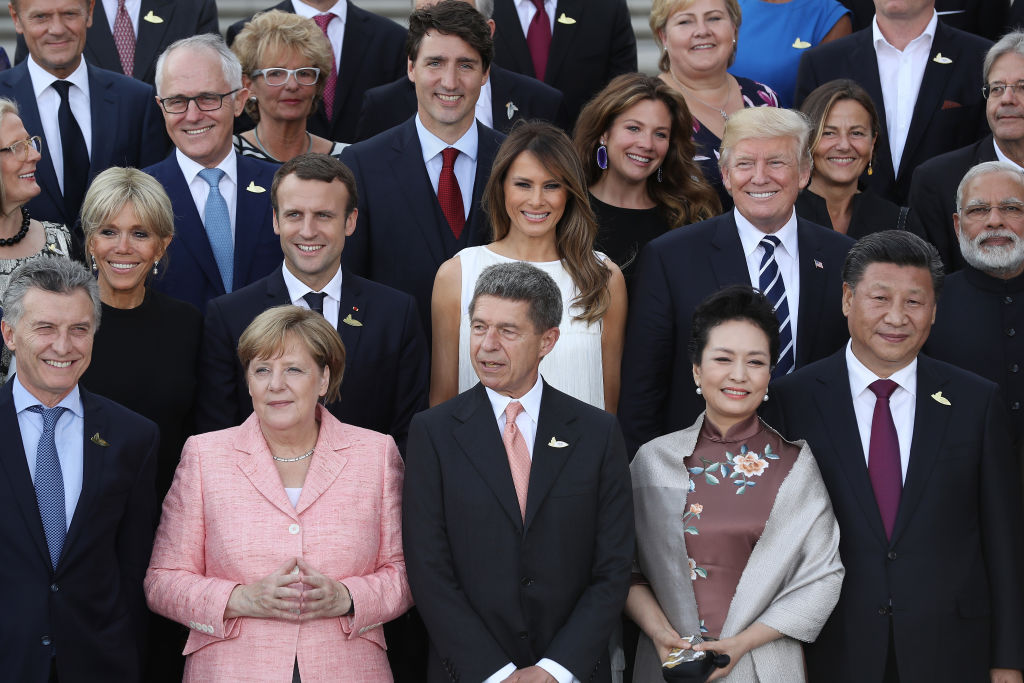
    Spot the good leaders: They talk less than the other ones. Credit: Sean Gallup/ Getty Images


    What are the crucial steps of humanity to rise again from its ruins? Well, there are more necessary steps than we can mention here. At the very beginning, we should learn how to adapt to a crisis: environmental-related disasters are on their way, and for long, we had underestimated the feeling of fear, uncertainty and insecurity. Western society has forgotten the lives of Jew community during World War II. A feeling that something hatred comes after you and potentially kills you We have forgotten the loss of lives of humans in WWII, just because Syrians, Iraqis and Afghans are far from London, New York and Paris. I do not discuss whether the crisis in the middle east is somehow the sandwich that George Bush, Putin and people like them prepared for the middle eastern people. Still, I stress the point that the European and American societies have zero scenarios for the times of health crisis, simply because it has not been a major issue in recent decades. Therefore, the first step must be to define a few scenarios for the times of health, security and political crises.


    The next step to take is to invest in education and technology. There is not even one economic shock that performs better than human knowledge. Both education and technology help the process of constant learning, adapting and progress. The next generations will suffer from the current crisis: in poorer regions such as Africa, Asia and South America it will even go up to nutritional facts. In Europe and North America, it will be about the initial endowment, education and welfare. Governments cannot propose many policies regarding these shortages: whatever they will touch, they will worsen it. The only thing they can do is to reduce taxes on education and investment and provide more subsidiaries for the poorer regions. That is all. If they do more, they will do harm.

    Governments are not expected to be able to solve the current crisis; science and medicine are supposed to solve it. It is becoming more and more evident that even democratic governments are inefficient. Take the case of the USA, Italy, France, Sweden, China and other countries that faced the COVID19 crisis: almost every government messed it up. As it seems, for decades and even centuries, we have overestimated these fat giants of bureaucracy. However, some of the leaders have done a better job: they talked less and actually did less. But it was more helpful: quick actions, clear messages and transparent information were the key elements of flattening the curves in Canada and New Zealand.

  • The matter of Trust: Social Capital

    As we have learned through the humanity history, tribes and nations that lacked trust among themselves as human beings have failed in their development winding road. Not unexpectedly, many attempts to rebuild trust within these failed groups of individuals were made, and again they mostly did not succeed. Trust is spread and built difficultly and breaks down in a matter of seconds of domestic war, country-wide natural disaster or extreme economic conditions, such as hyperinflation or famine. There are steps that prosperous nations have taken, and others can still take before it is too late. For least developed regions that have been affected continuously with religious or racial conflicts, it could take up to a century to build trust after the permanent ceasefire (if there will be any).

    Diversity is a key element in achieving a sustainable future for a nation.

    The very first step a single nation can take is to forget about its past, as using it to be proud or to blame anyone. Consider the countries that we know as developed: many of the people there do not share a common history among themselves. Many under developed countries are now facing not so glorious times. Take the case of Iraq, Afghanistan, Tajikistan and many other Asian countries that are a sort of heritage for humanity, but are facing daily troubles in providing their nations with basic matters of prosperity. In the writer’s opinion, it is crucial to forget about the past and only look at it as the things that happened and we only must know and learn from, nothing more.

    To achieve a higher level of trust among the individuals, the government must guarantee the protection of property rights and regulations to protect people and their businesses, jobs and health. All the threats to individuals’ assets, health and the basic matters of daily living must be prevented and punished in case. It can help the economy build around a growth path that in long-term keeps the people stick together as respected individuals. It also helps to save, invest and make the growth more sustainable.

    One last step is to define a common goal and the necessary framework to achieve via democracy. This goal can be “to become the greatest country in the world, or the most sustainable one or even simply become the happiest nation”. An excellent example of such a goal is what the Swiss government established a few decades ago, when people were asked if they wanted to live in a sustainable growth environment. The nation will have one valuable goal in common, and the diversity among individuals must be accepted. No religious or political movement should be able to limit the people to think and act in a particular direction.

    As history has shown us, the nations that did not grow trust and the relative institutions, have not achieved any of the sustainable growth goals. Physical capital and machinery is not all: human and social capital are crucial elements in reaching a good level of economic and social development. Countries must invest in the humans and their education, as well as investing in natural resources and machinery.

  • How to Bounce the Economy Back

    The current crisis will end soon, as well as other recessions throughout history that ended after a relatively short period. Despite the fact that some markets, most importantly, the labour market will remain affected for a longer period of time, a rational set of policies shall help the economy back in its previous setting. Our reaction towards the two great slumps we have experienced in the last 100 years were quite different, and both were approximately effective in short-term. During the 1930 depression, the governments increased their expenditure and caused debt. This fiscal policy led to bigger governments (obese governments), where the government became a new and active agent in macoeconomic-scale. The response during the Great Recession, starting in 2007 and lasting until 2009 was wholly different. This time, the Central Banks intervened in the money market and operated via asset management. Quantitative and Qualitative Easing policies commenced and the financial markets moved sluggishly back to their long-run growth. The Corona outbreak is entirely different, in all of its aspects.

    The most significant difference of this recession is that it is fully exogenous. No one could predict such pandemic back in December 2019. It almost has no economic or financial background. Either way the authorities, whether in monetary or fiscal sector are expected to intervene in the economy as soon as possible. Our toolbox of theory and policy sets did not contain any solution to such an exogenous force attacking the markets. Hence the governments started to increase their spending in the health sector. It could include setting up new and emergency clinics, importing medicine or granting funds to research centres to speed up the procedure of vaccine and medicine production. The second reaction was to transfer cash flows to enterprises, families and people who are directly affected by the virus or the quarantine time. France provided the sick leave, China spent billions of Yuans to support the businesses and Italy is helping the individuals by direct payment. But these sources are not infinite, and if the outbreak lasts until summer, some countries may adopt printing money policy and transfer the crisis to long-term, but deeper and more difficult to solve.

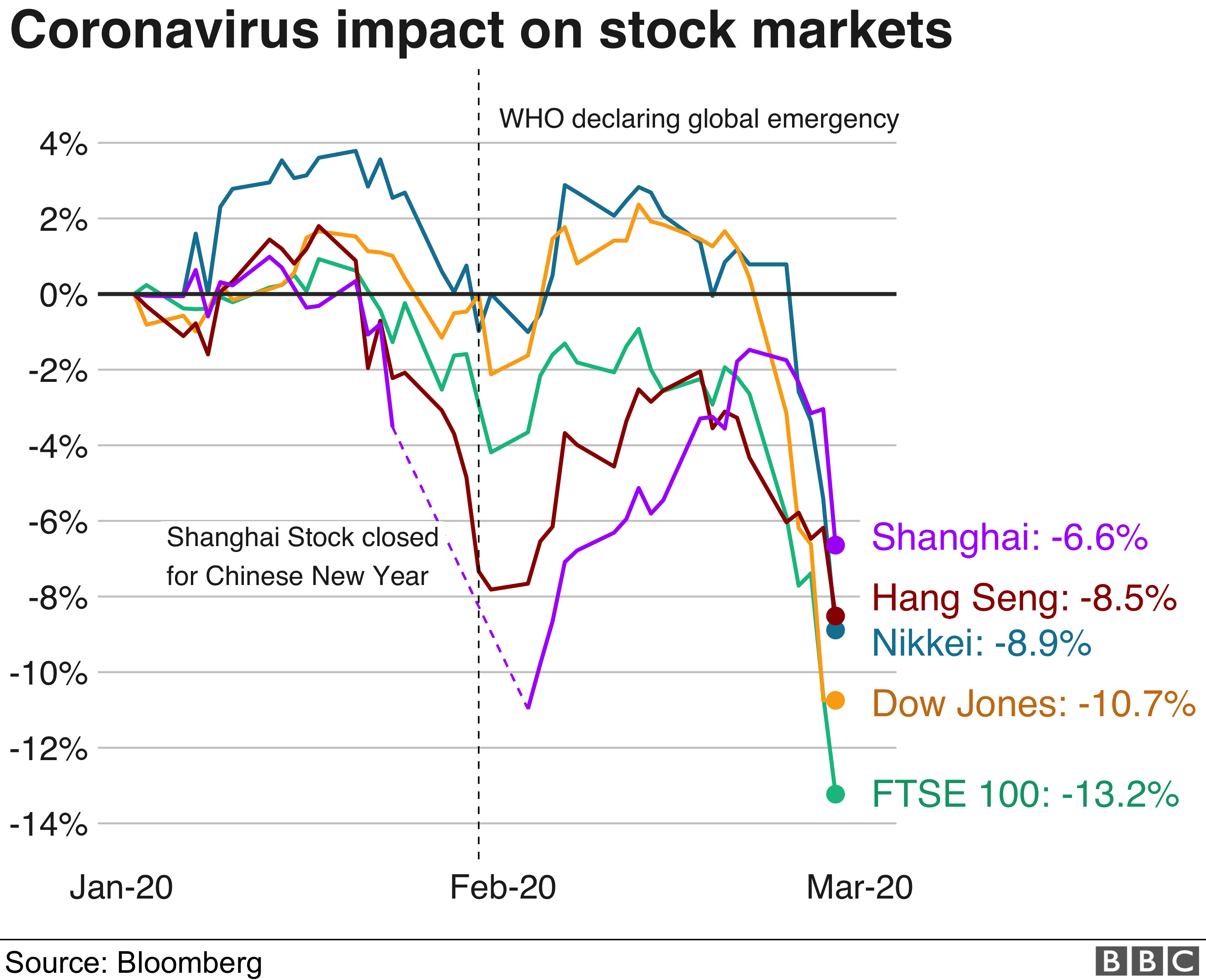
    Coronavirus: Global shares suffer worst week since financial ...
    Almost all the financial markets were affected significantly in the last month

    When the epidemic virus settles and we can go back to work, the suppressed demand will be the initial force to boost the economy. Many households are already planning long vacations in or out of their countries. On the supply side of the story, the European Central Bank might plan to issue Corona bonds to finance its intervention in the monetary sector in a longer window of time. Perhaps asset management actions to help the European enterprises will be effective again. We should remember: the rates of unemployment were at their lowest levels in decades, financial markets were performing well for a long period of time. The economy will revive and be growing again. The question that governments and central banks are pursuing right now is if there is a low-cost shortcut to lessen the time of moving back to our previous position.

  • Covid19 – Why should not we panic?

    All of us are experiencing what will be remembered for the next generations as CoronaVirus epidemic disease. More precisely, we have no idea at this moment on how the virus is going to evolve over time. What we are almost certain about is its effects on our economy in short-medium term. What we can forecast is the effects on people and their networks in long-term. Here, I will present some very preliminary comments on different aspects of this crisis that people have to deal with.

    Image result for corona toilet paper

    Supermarkets: The economy works differently than most people think. Our economies are based on a competitive market and some regulations to protect the property rights. But why cannot this huge system of theories, technology and regulations provide you with toilet paper these days? Again, like most of the economists I have to mention the classic terms of demand and supply. In short-run, demand is more elastic than supply. It means that it is easier for 1 family to buy 100 more toilet paper rolls than for 100 families to produce 1 more roll. For increasing the manufacturing level, you need machines, labour, transportation and most importantly time to combine these inputs. In short-term, the stock of super markets and firms runs out of toilet paper, because millions of people are going to increase their demand to be able to stock dozens of rolls in their homes! It should not be surprising that maybe for one to two weeks, you have to use a sort of substitute good for toilet paper. We economists just like other people, also need these products. Trying to compromise the shortages of our economy does not pay our bills, but it helps us to comprehend the situation of the real world, where things are different than people’s ideal world. On the other hand, when the pandemic situation ends, we will probably have better supply chain among the supermarkets, using Artificial Intelligence for matching the needs of the customers and the availability of the stock capacity. You will also be able to download more efficient applications to order products from your local suppliers.

    Culture and Networks: I assume CoronaVirus will make hygienic products more profitable, leading to a long-time increase in the production of hand sanitizing gels for isntance. This increase will lead to a significant decrease in the price of such products. The awareness we gain regarding our health and hygiene, can be one of the very few advantages we can get during this crisis. Public places, like restaurants, bars and clubs will be under pressure to increase the standards in their environment. There will be worries about the seasonal flu for some years, leading to a greater loss of schooling/working hours in the upcoming cold seasons. Elderly will receive less visits around Christmas and new years’s eve, which can be sort of appreciated also for some of the youth!

    Do I have to panic when I cough hard or have unusual fever? Sorry to say, if you live in the Northern Hemisphere and you have problems with your respiratory system and you are more than 80, maybe yes you should. Stay in home and follow the instructions of your local government for treatment. CoronaVirus does not threaten you if you take it seriously (No Panic though). Scientists are working hard in research laboratories around the globe to produce the vaccination and effective medicine. You will never be hurt if you trust scientific procedure! Just stay at home and protect yourself until the medicine will be in all the pharmacies!