
The current crisis will end soon, as well as other recessions throughout history that ended after a relatively short period. Despite the fact that some markets, most importantly, the labour market will remain affected for a longer period of time, a rational set of policies shall help the economy back in its previous setting. Our reaction towards the two great slumps we have experienced in the last 100 years were quite different, and both were approximately effective in short-term. During the 1930 depression, the governments increased their expenditure and caused debt. This fiscal policy led to bigger governments (obese governments), where the government became a new and active agent in macoeconomic-scale. The response during the Great Recession, starting in 2007 and lasting until 2009 was wholly different. This time, the Central Banks intervened in the money market and operated via asset management. Quantitative and Qualitative Easing policies commenced and the financial markets moved sluggishly back to their long-run growth. The Corona outbreak is entirely different, in all of its aspects.
The most significant difference of this recession is that it is fully exogenous. No one could predict such pandemic back in December 2019. It almost has no economic or financial background. Either way the authorities, whether in monetary or fiscal sector are expected to intervene in the economy as soon as possible. Our toolbox of theory and policy sets did not contain any solution to such an exogenous force attacking the markets. Hence the governments started to increase their spending in the health sector. It could include setting up new and emergency clinics, importing medicine or granting funds to research centres to speed up the procedure of vaccine and medicine production. The second reaction was to transfer cash flows to enterprises, families and people who are directly affected by the virus or the quarantine time. France provided the sick leave, China spent billions of Yuans to support the businesses and Italy is helping the individuals by direct payment. But these sources are not infinite, and if the outbreak lasts until summer, some countries may adopt printing money policy and transfer the crisis to long-term, but deeper and more difficult to solve.
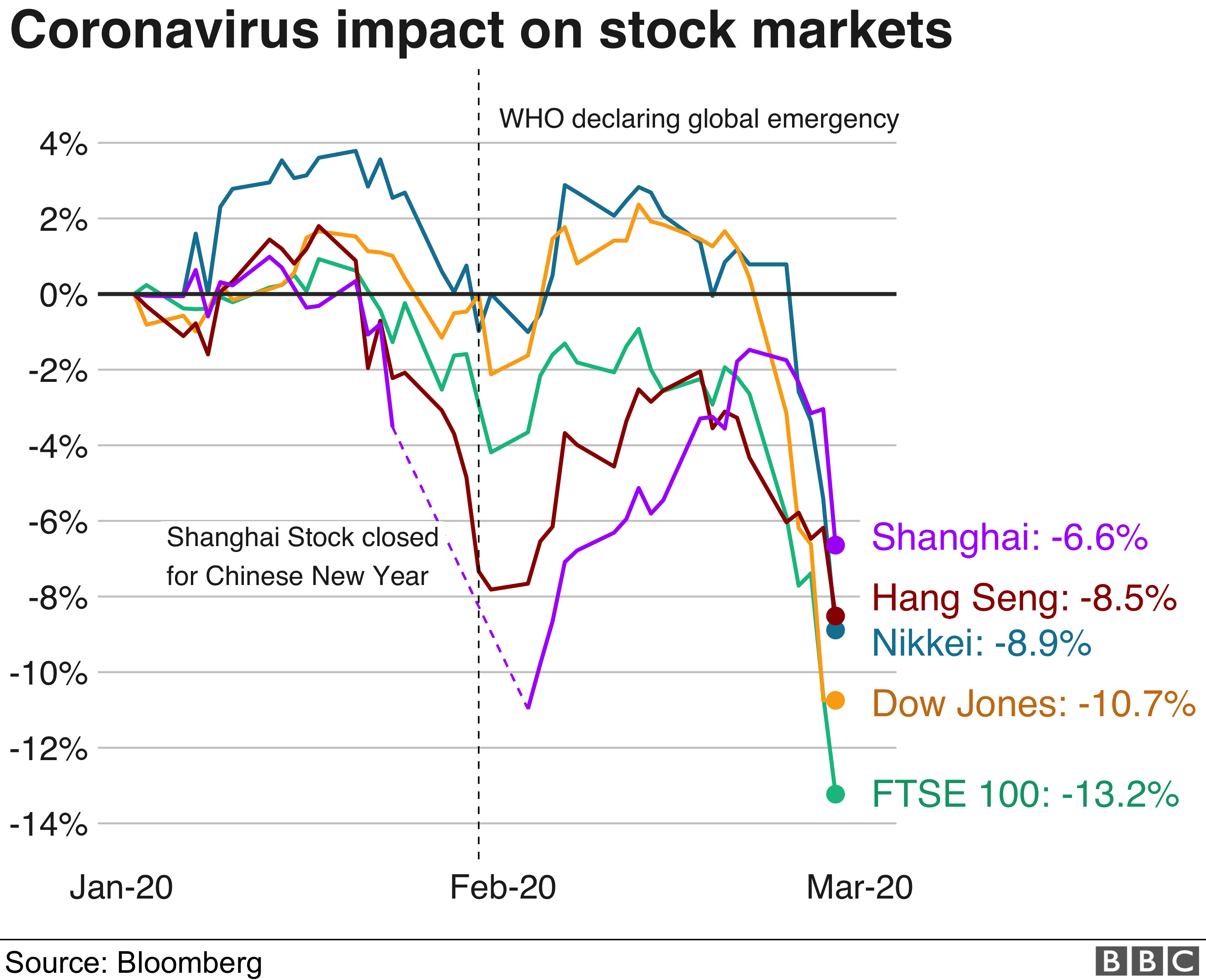
When the epidemic virus settles and we can go back to work, the suppressed demand will be the initial force to boost the economy. Many households are already planning long vacations in or out of their countries. On the supply side of the story, the European Central Bank might plan to issue Corona bonds to finance its intervention in the monetary sector in a longer window of time. Perhaps asset management actions to help the European enterprises will be effective again. We should remember: the rates of unemployment were at their lowest levels in decades, financial markets were performing well for a long period of time. The economy will revive and be growing again. The question that governments and central banks are pursuing right now is if there is a low-cost shortcut to lessen the time of moving back to our previous position.
 Siavash Mohades